Chris Hart
Chief Executive Officer
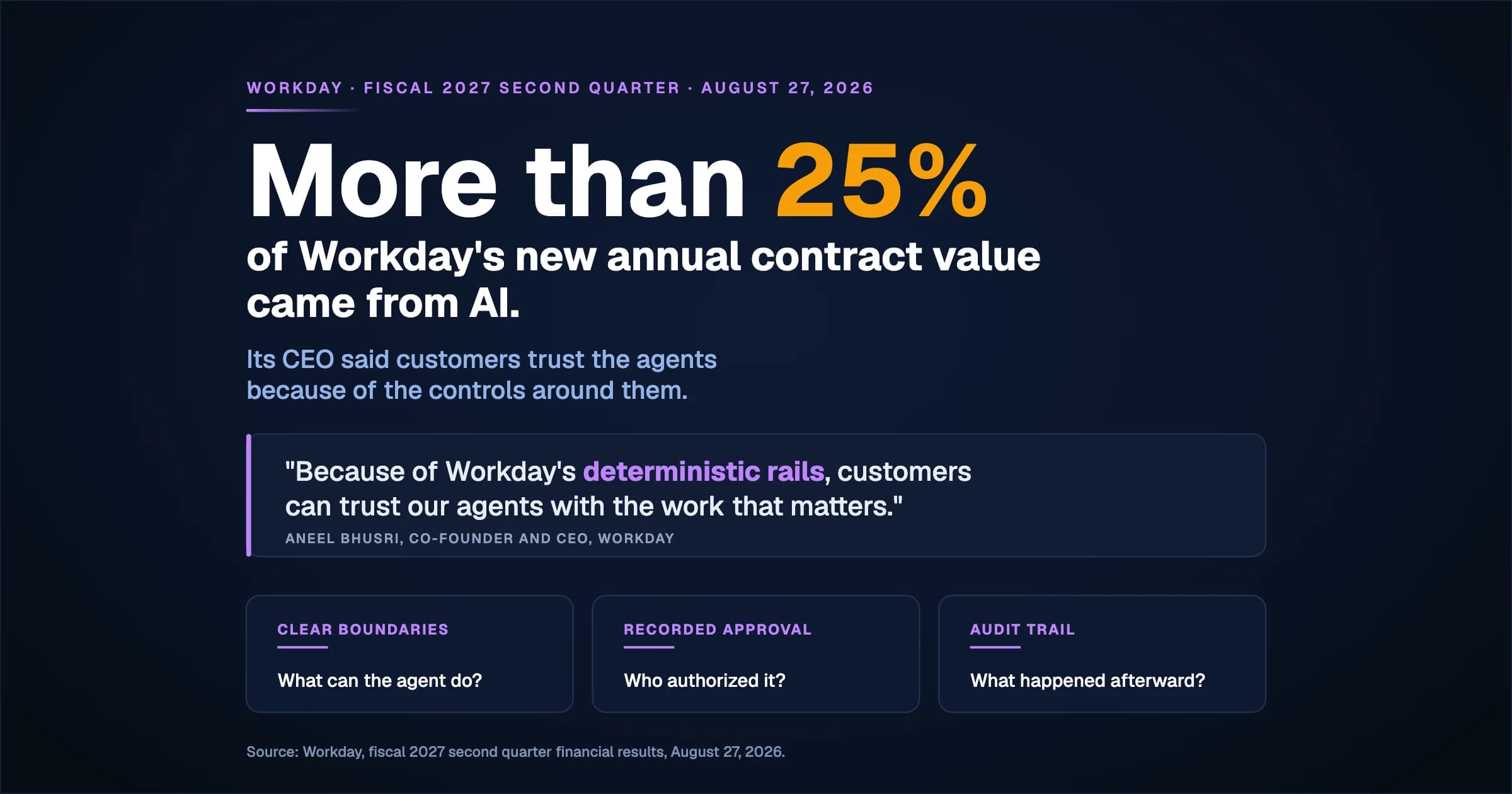
AI Drove More Than a Quarter of Workday's New Sales. Its CEO Credited the Guardrails.
Workday says the controls around its agents are part of why customers trust them. Gartner predicts governance failures will force many companies to pull autonomous agents back from production. The common issue: companies need to know what an agent can do, who authorized it, and what gets recorded afterward.
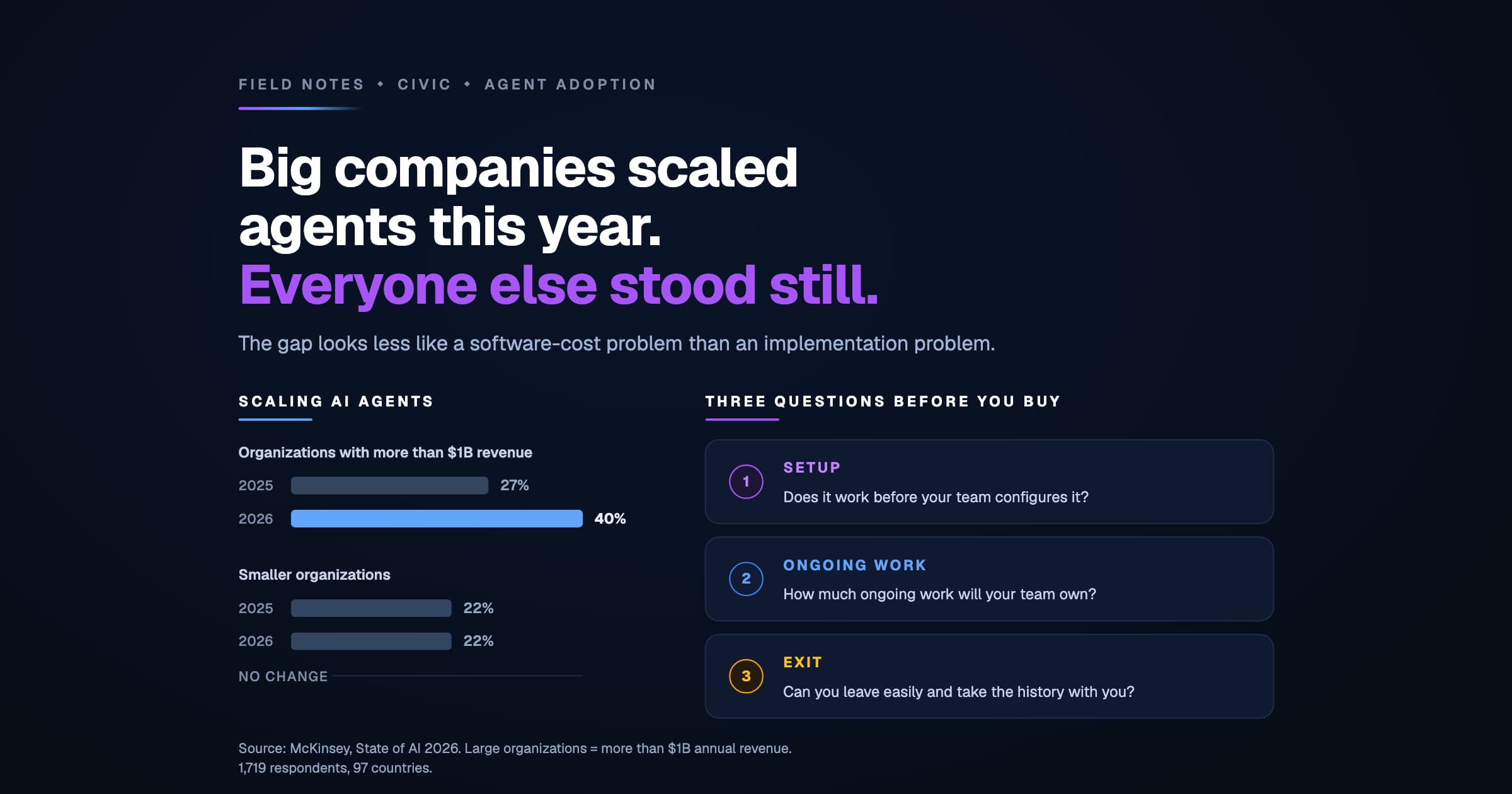
Big Companies Scaled Agents This Year. Everyone Else Stood Still.
McKinsey's 2026 State of AI: 40 percent of billion-dollar companies are scaling agents, up from 27. Smaller companies sat flat at 22. The gap is implementation capacity, not software cost, and there are three questions to ask before you buy.
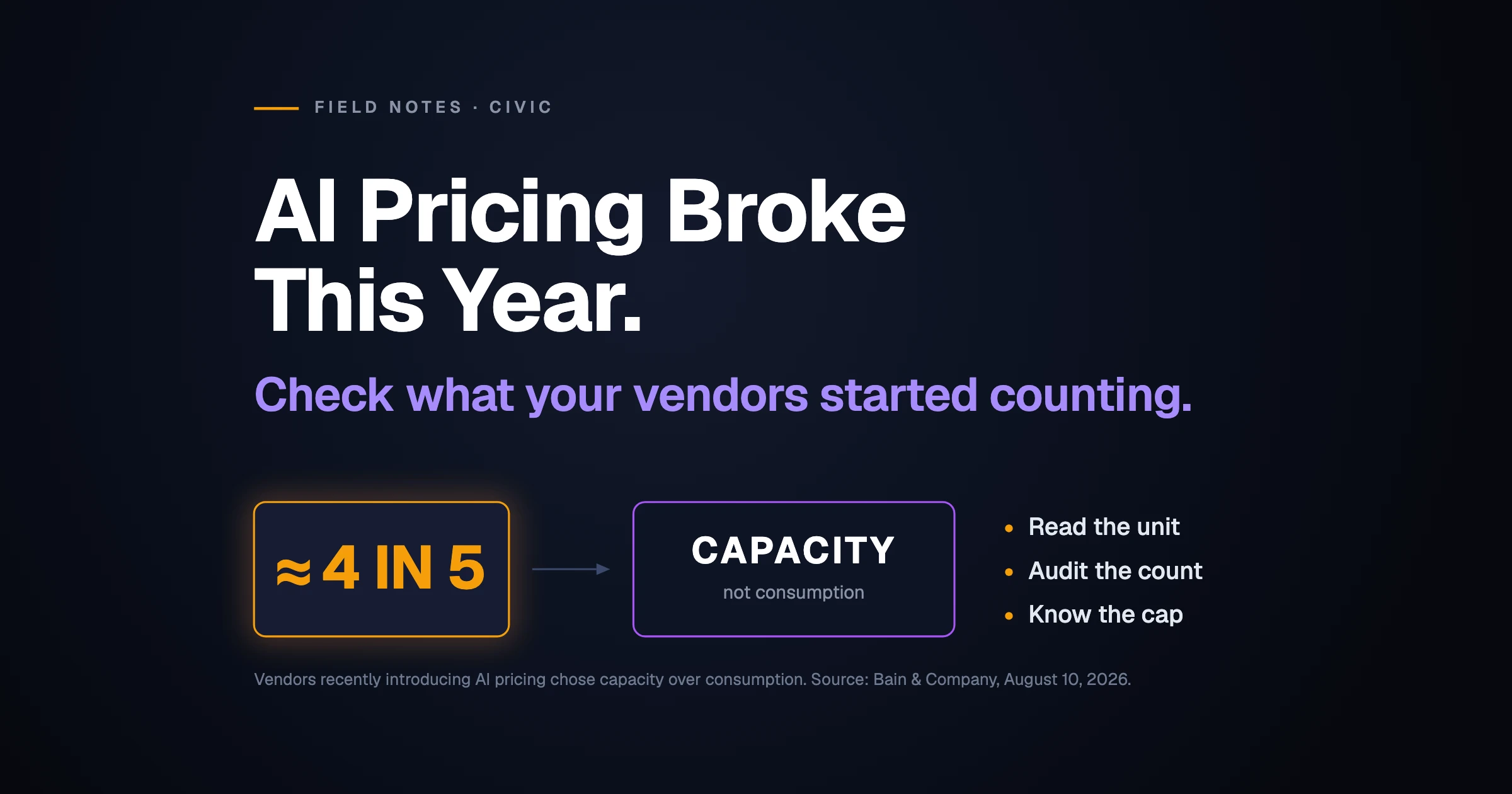
AI Pricing Broke This Year. Check What Your Vendors Started Counting.
About four in five vendors recently introducing AI pricing chose to meter pricing on capacity over consumption. Buyers need to know what gets counted, who carries the quality risk, and whether they can audit the bill.
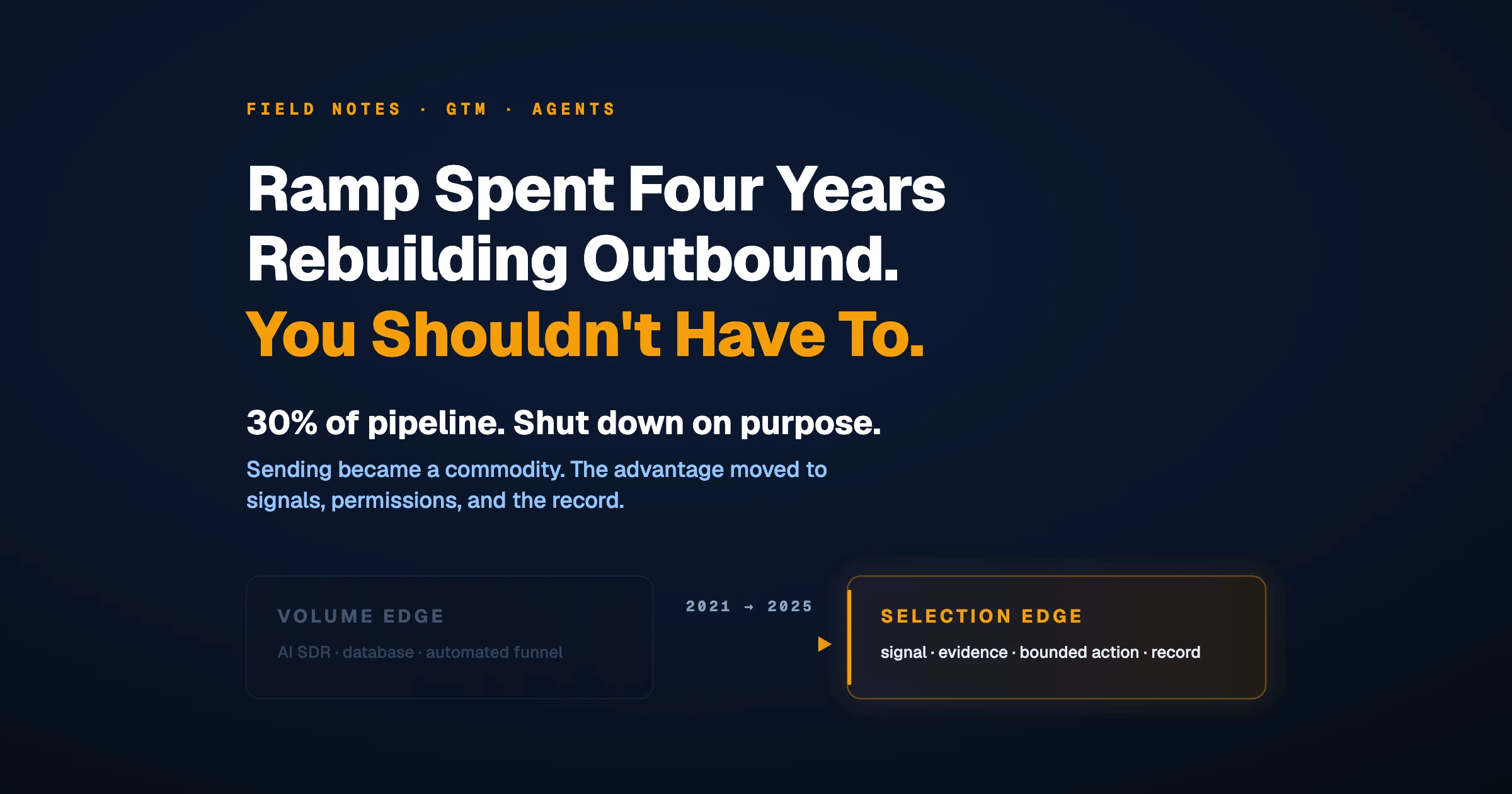
Ramp Spent Four Years Rebuilding Outbound. You Shouldn't Have To.
Ramp shut down the AI SDR program behind 30 percent of its pipeline, then spent four years rebuilding outbound around evidence, bounded action, and a record. The architecture they landed on is right. The timeline is the part almost nobody can copy.
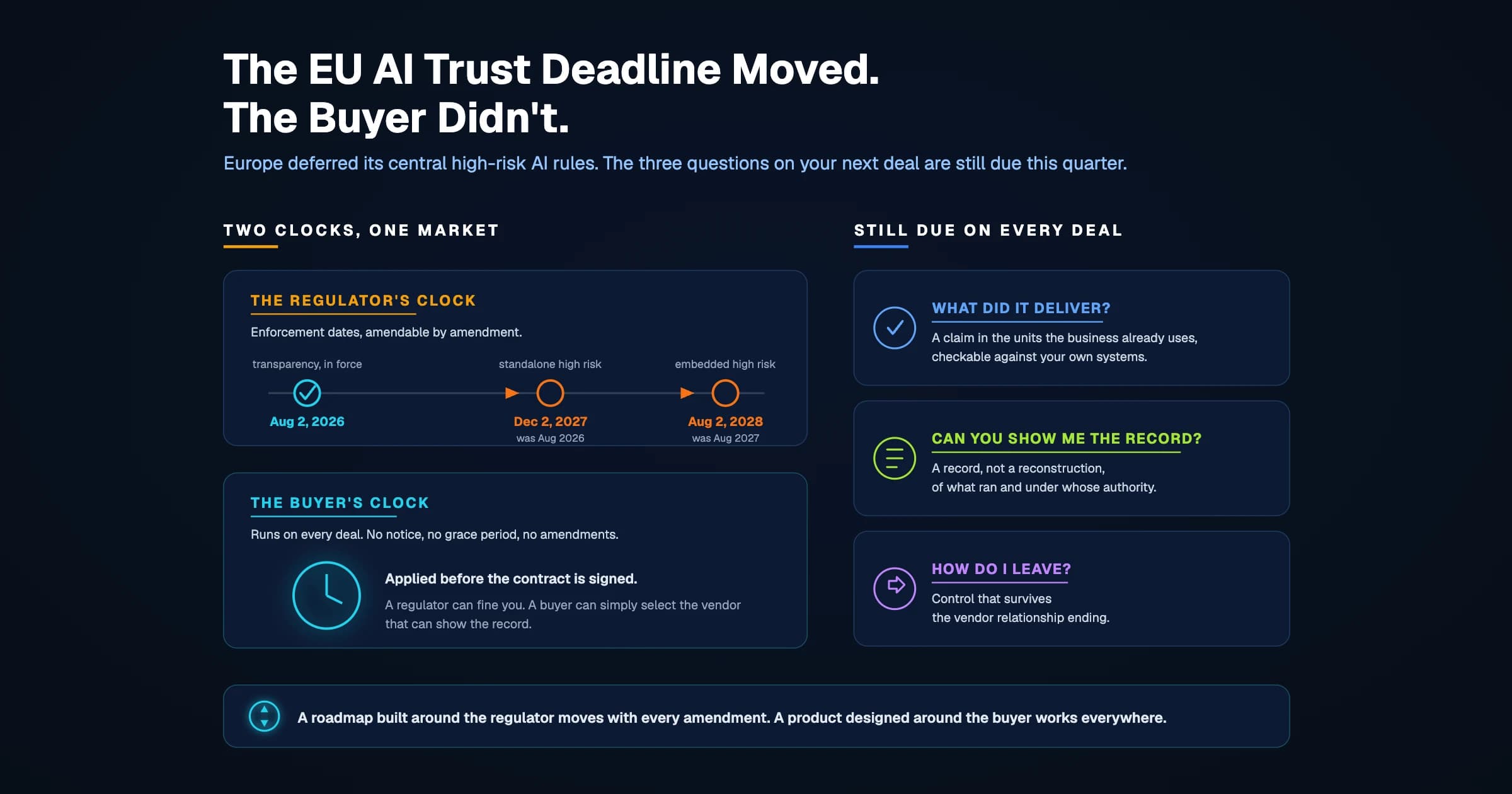
The EU AI Trust Deadline Moved. The Buyer Didn't.
Europe pushed its central high-risk AI requirements to 2027 and 2028 while most of its transparency rules took effect on schedule. If your trust roadmap was timed to a regulator's calendar, you now know it was the wrong clock.
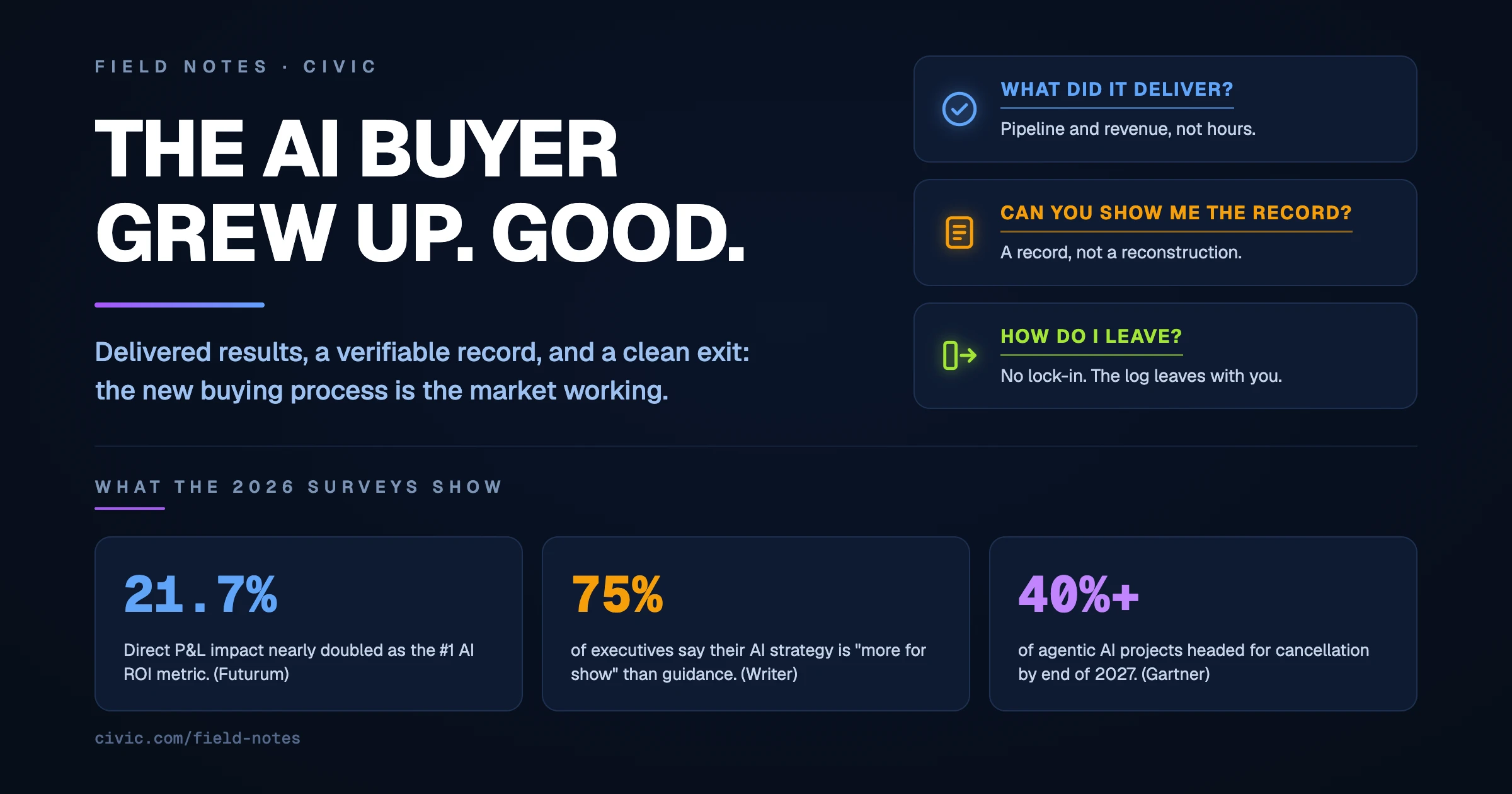
The AI Buyer Grew Up. Good.
The 2026 buyer wants to know what your agent delivered, how you can prove it, and what happens if it fails. With only 29% of companies reporting significant ROI from generative AI, that scrutiny is healthy.
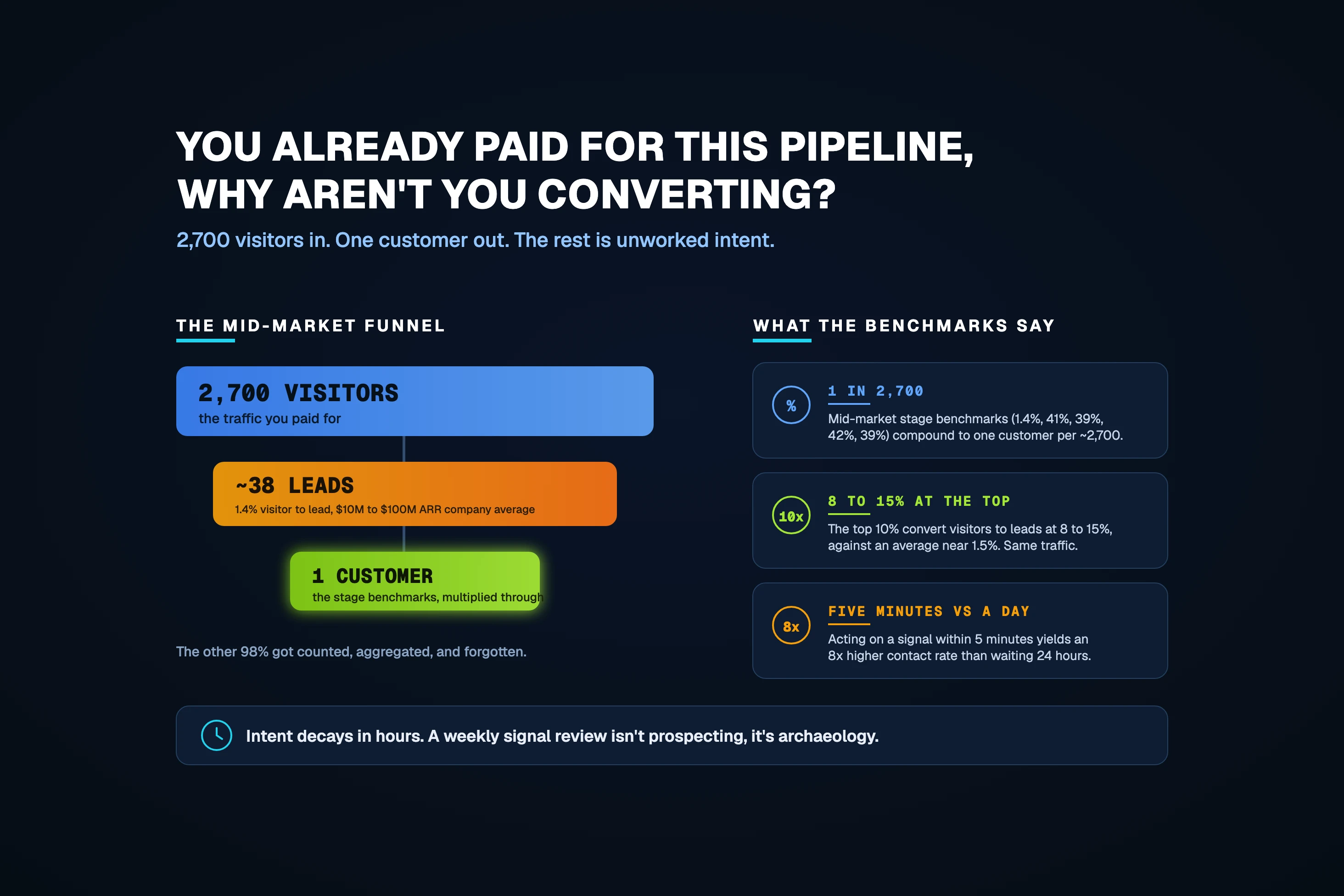
You Already Paid for This Pipeline, Why Aren't You Converting?
Your site converts at ~2% of visitors. The other 98% aren't gone. They're sitting in tools you already pay for, waiting for someone to notice them.
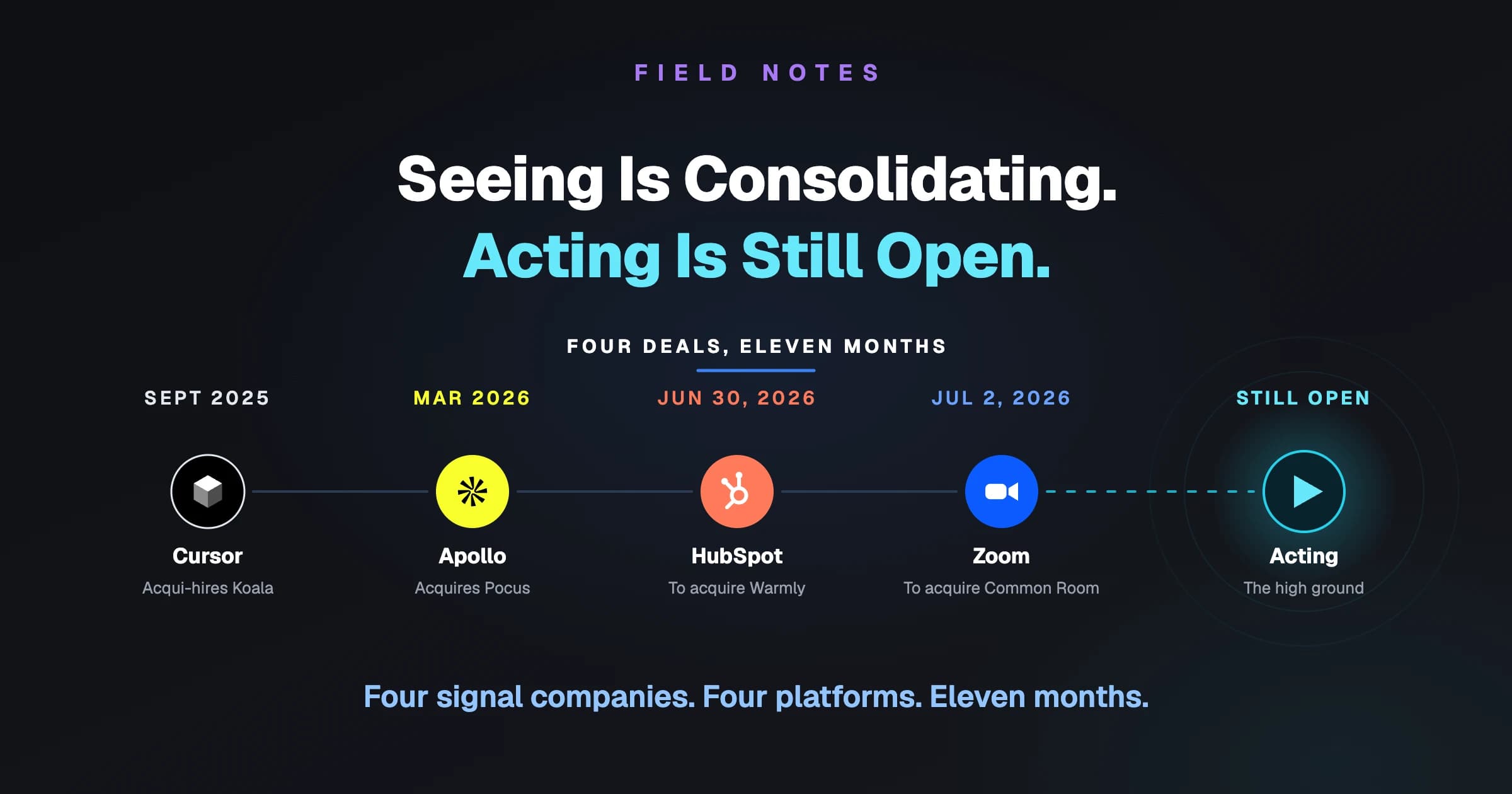
Seeing Is Consolidating. Acting Is Still Open.
Four independent go-to-market signal companies disappeared into four larger platforms in eleven months. That is not noise. It is the market telling us where the value is moving: seeing is becoming infrastructure, and acting is the layer still worth building on.
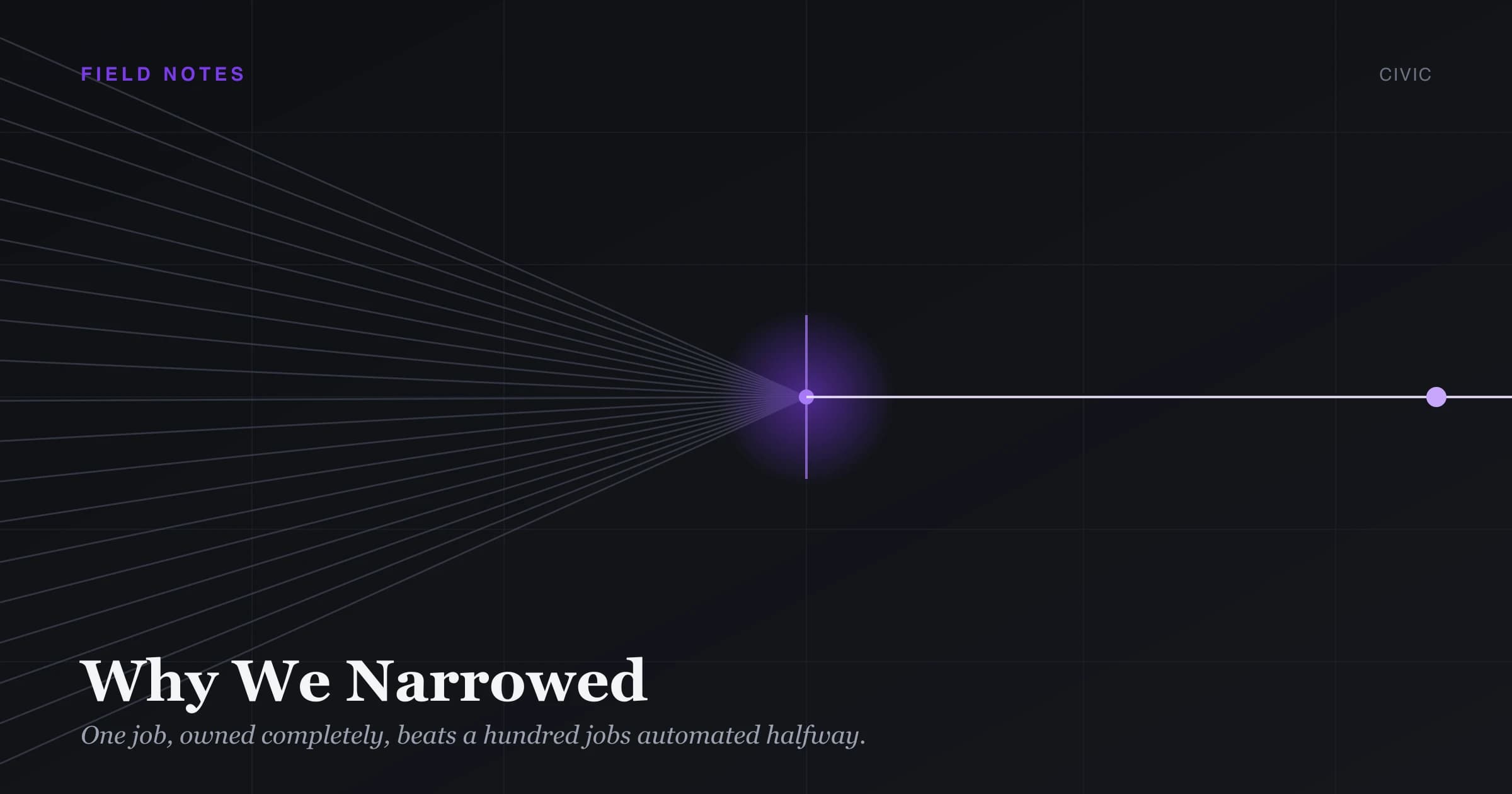
Why We Narrowed
We focused our platform that could do anything to a product that does one thing on its own. Here's why.
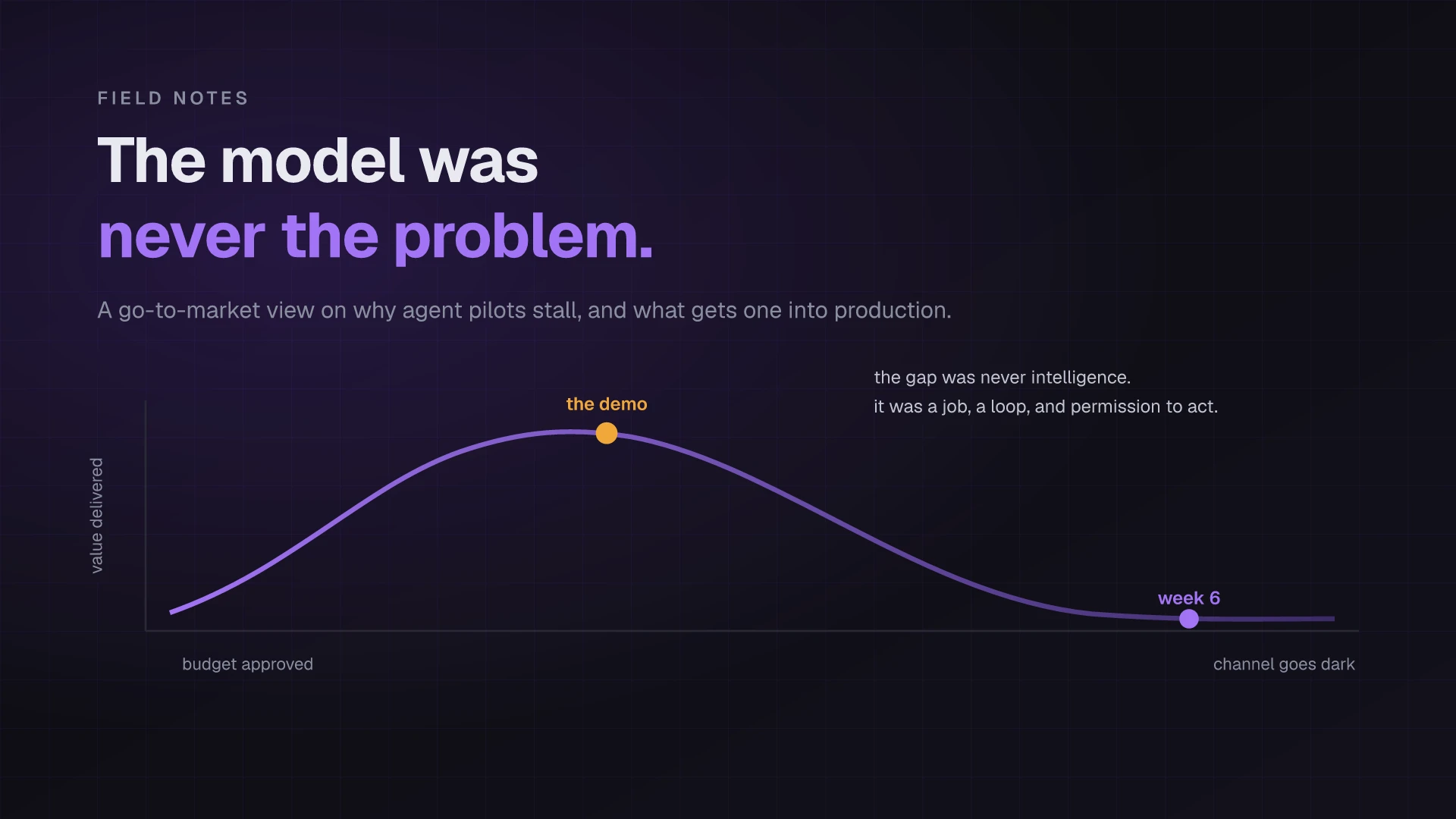
The Model Was Never the Problem
Most agent pilots stall for reasons that have nothing to do with intelligence. A go-to-market view on why, and what actually gets an agent into production.
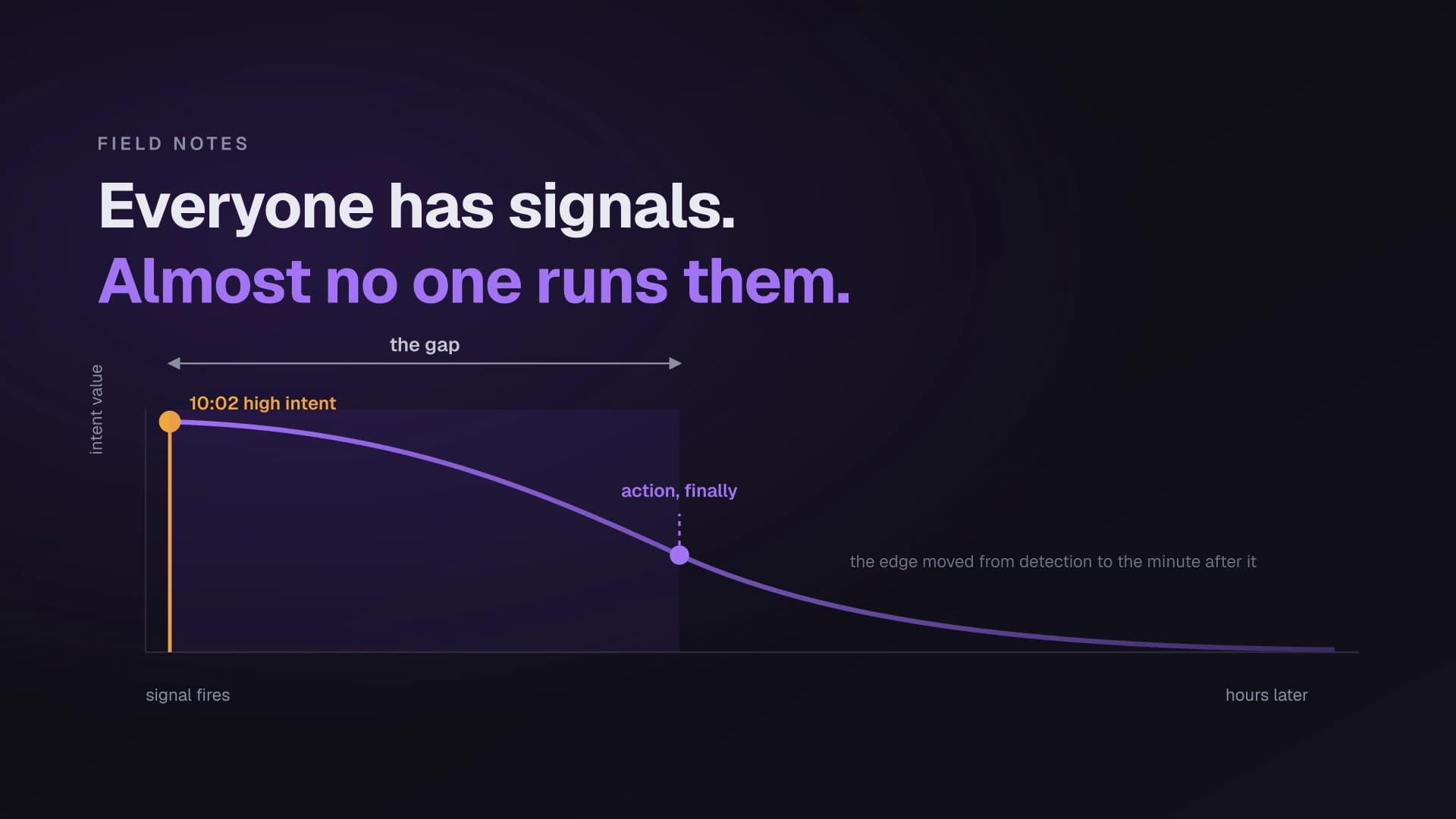
Everyone Has Signals. Almost No One Runs Them.
Signal-based selling became the consensus go-to-market strategy of 2026. The bottleneck is no longer detecting intent. It is what happens in the next minute.