Field Notes
 gtmsignalsbryn
A System of Action
More truth than ever. Less time to act on it. Every tool in a growth stack is a source of truth now, and the best it has ever been. The action still lives with a person, on a hunch. What's worked for us is a system of action that sits outside the records, reads all of them, runs rules we wrote, and keeps a receipt for every move. I gave this as five minutes at The State of B2B GTM Summit on Wednesday; this is the longer version.
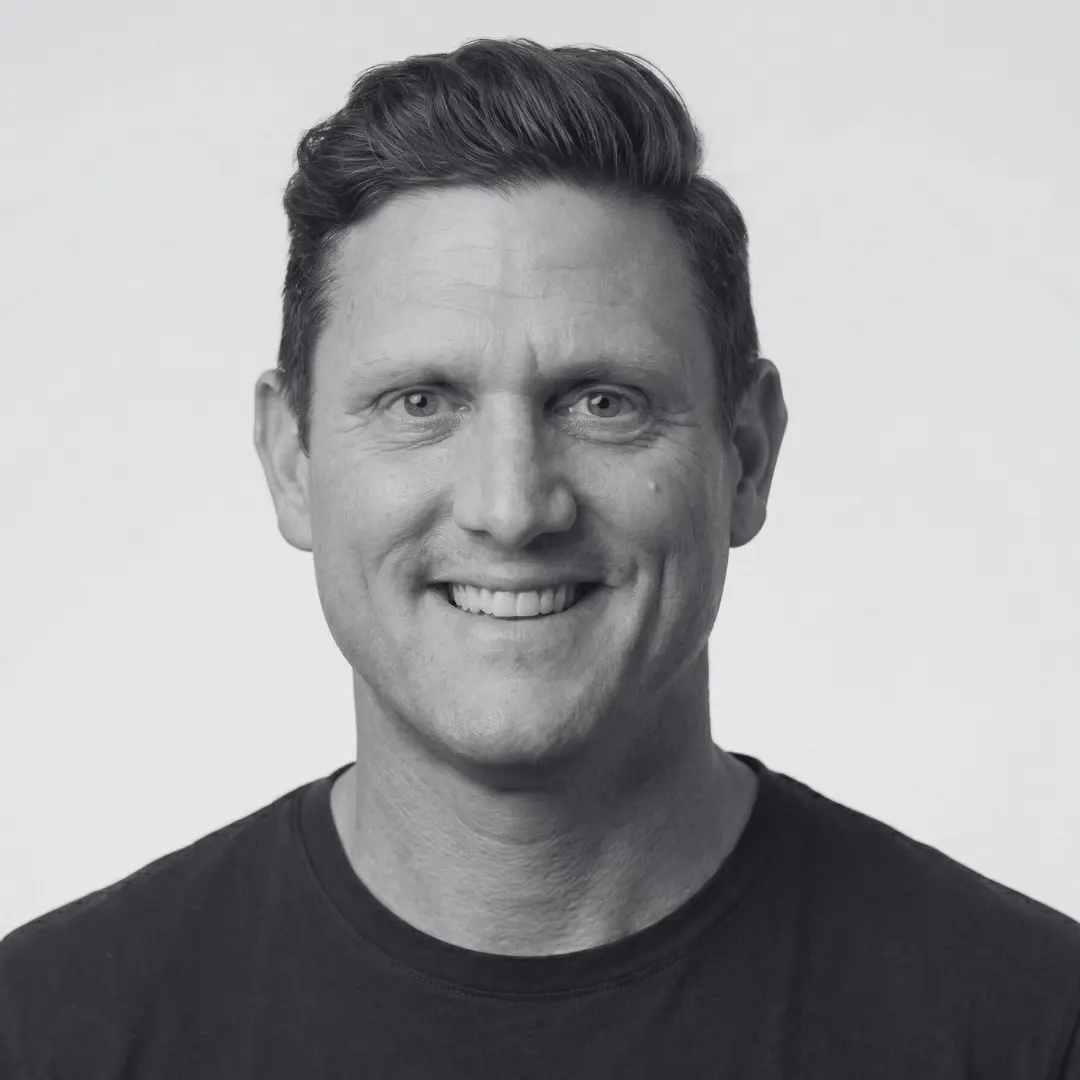 Brad Webb
 Growth Team of One, 3 of 4growth-team-of-onegtm
The Work That Runs Without You
By hand, a trial that went quiet on Tuesday heard from me nine days later, or not. A rule drafts the check-in at ten past ten. This part sorts the small customer work onto three rungs by what one wrong run would cost, and writes the rule in four fields. Part 3 of 4 of The Growth Team of One.
Brad Webb Growth Team of One, 2 of 4growth-team-of-onegtm
The Work You Stop Doing
Subtraction is the step everyone wants to start with, and most of us do it backwards. We cut what looks optional because it is small and nobody asked for it, and keep what looks mandatory because it has a meeting attached. Looks are the disguise. Before you stop anything, flip every line from how it looks to who would notice if it stopped, and when. Stop the work nobody would notice for a month. Never stop the work a customer would notice by lunch. Part 2 of 4 of The Growth Team of One.
Brad Webb brynproductbriefs
Let me be Brief...
Briefs, by Bryn is open as a Public Preview. Name a company and inside a minute Bryn hands you a page about it: who it is and whether it looks like a buyer, a score out of 100, the tools it runs, the people who would sign off, and the first follow-up Bryn would run. The last section is the receipt: the Brief was built by one of Bryn's own rules, and it prints the clock of every step. Open it later and the score re-reads. Any email address signs in.
Brad Webb Growth Team of One, 1 of 4growth-team-of-onegtm
The Job Nobody Wrote Down
If you are the whole growth team, you do not have a job. You have a department with one name on it, and nobody wrote it down, including you. Before you decide what to stop, automate, or hire for, write the job down by recurrence, not by function, and tag every line. The longest column is the one nobody owns. Part 1 of 4 of The Growth Team of One.
Brad Webb brynproductchangelog
Bryn's First Big Leap
The Bryn app is rebuilt today around one rule: one screen per job. Scores read as meters with their weights, never a bare number. Setup can now be run as a conversation, by Bryn in the app or by your own agent over MCP, into a draft that goes nowhere until go-live. And the record got easier to read.
Brad Webb Field Guide, 4 of 4bryngtm
The Class Everyone Rents
Ecosystem exhaust is the fourth class in the legend and the one everyone rents. Hiring, funding, tech installs, leadership changes: the company's weather, sold to you and to everyone who sells against you, and now callable by everyone's agent over MCP. Everyone's weather is nobody's edge. The only thing that makes it yours is the join. Part 4 of 4 of Signals: A Field Guide, and the legend, complete.
Brad Webb Field Guide, 3 of 4bryngtm
The Class You Filed
CRM lifecycle is the class you own on paper and read least. Closed-lost is filed as an ending when it is a state, stalled evaluations sit in a stage built for counting, and renewal dates never met a behavior. A filed record alone is a filing. A filed record that comes back to your pricing page is a specimen. Part 3 of Signals: A Field Guide.
Brad Webb Field Guide, 2 of 4bryngtm
The Class You Rent
Anonymous site intent is the class almost everyone rents, including us. Renting is not the sin. Renting badly is: paying for a match rate you never route, treating a resolved visit as a lead, and forgetting that a rented instrument reprices, degrades, and gets rented to your competitor. Part 2 of Signals: A Field Guide.
Brad Webb bryngtmfollow-up
Follow-Up Has No Owner
Labor Day is a decent excuse for a time-spent audit. The growth owner's real labor is not strategy, it is unowned follow-up: checking, cross-referencing, guessing, writing, forgetting. The pattern is follow-up, maybe, forgot (3d). Give it an owner: a person or a Play. Save Your Labor (Day) makes the first month of Bryn free through Sep 17.
Brad Webb Field Guide, 1 of 4bryngtm
The Class You Own
There are four classes of GTM signal and only one of them is yours. Product signals are the highest-fidelity class, the only class nobody can rent out from under you, and the class almost nobody runs. Part 1 of Signals: A Field Guide.
Brad Webb Personalization, 3 of 3bryngtm
The Moment, Measured
Open rates lie to you about all six stages at once. Part 3 of 3 on personalization closes the series with the measurement: four numbers that survive contact (moments seen, moments cleared, touches landed in-window, accounts that moved), why time-to-touch is the master metric, and how the record turns measurement from a project into a query.
Brad Webb Personalization, 2 of 3bryngtm
Anatomy of a Moment
Between a signal firing and a relevant touch landing there are six stages: signal, identity, score, Play, bounds, record. Each one is a place teams silently fail, and doing all six by hand, in minutes, is a staffing problem disguised as a discipline problem. Part 2 of 3 on personalization: the mechanics.
Brad Webb Personalization, 1 of 3bryngtm
The {FirstName} Fallacy
Token personalization is free now, which means it is worth nothing. Real personalization is responding to what a lead, a prospect, or a trial user just did, and the moment expires in minutes. Part 1 of 3 on personalization: the why.
Brad Webb bryngtmagents
Proof of Claims
For a decade, PoC meant Proof of Concept. The mature market repriced it. The proof that closes now is a Proof of Claims: a claim in the buyer's units, a record they can check, and a clean exit. Why that is the burden GTM leaders should want to carry.
Brad Webb bryngtmsignals
When the Buyer Is an Agent
Your buyers are starting to send agents to evaluate you: reading your docs, calling your API, running your CLI before a human ever fills a form. That is a new class of first-party signal, and the teams that capture it and run it under governance will win the next few years.
Brad Webb bryngtmplays
One Operator, a Portfolio of Plays
The lean teams everyone is citing did not win by automating outreach. They win because one operator now covers what used to take a team, by running a portfolio of Plays. The unit of GTM leverage is shifting from headcount to Plays.
Brad Webb bryngtmsignals
The Signal You Can't Buy
For a decade the play was to buy more signal. But a signal your competitor can also buy was never an edge. The case for owning the one signal you can't buy: how people use your own product.
Brad Webb gtmagentsstrategy
Buy vs Build Has Become Can vs Should
For twenty years the go-to-market tooling decision was buy versus build. Agents collapse that axis. Capability stops being the constraint, and the real question becomes should this run at all, and should it run on its own.
Brad Webb bryngtmsignals
We Are Customer Zero
Before Bryn ran for anyone else, it ran for us, and it still does. Why we stopped buying and started building, in Bryn's own voice.
Brad Webb bryngtmsignals
Announcing Bryn, by Civic
Today we're launching Bryn, by Civic: the Signal-Based GTM agent for Growth teams. Generally available, self-serve, live. Here's what it is, why we built it, and the eyes-versus-hands argument it settles.
Brad Webb gtmsignalssignal-based-selling
We Tried to Buy Our Way Out of the Signal Gap
Every quarter we bought another tool that could see intent. None of them could act on it. What I learned trying to close the gap between a signal and a move, and why we stopped buying and started building.
Brad Webb ai-literacygtmprompting
Five AI Habits for GTM Operators
Most GTM teams got handed AI with no manual. Here are the five habits that separate the operators who get real work out of it from everyone still talking to a chat window.
Brad Webb gtmplggtm-engineering
A Field Guide to Go-To-Market, for People Who Read Code
How to read the commercial system with engineering eyes.
Brad Webb openclawagentsbuilding
An OpenClaw agent and its creator share their experience
OpenClaw experiment: how Civic’s Brad Webb built Snowcrab, an agent with identity, live hockey monitoring, Civic Nexus integration, and real-world lessons.
Brad Webb